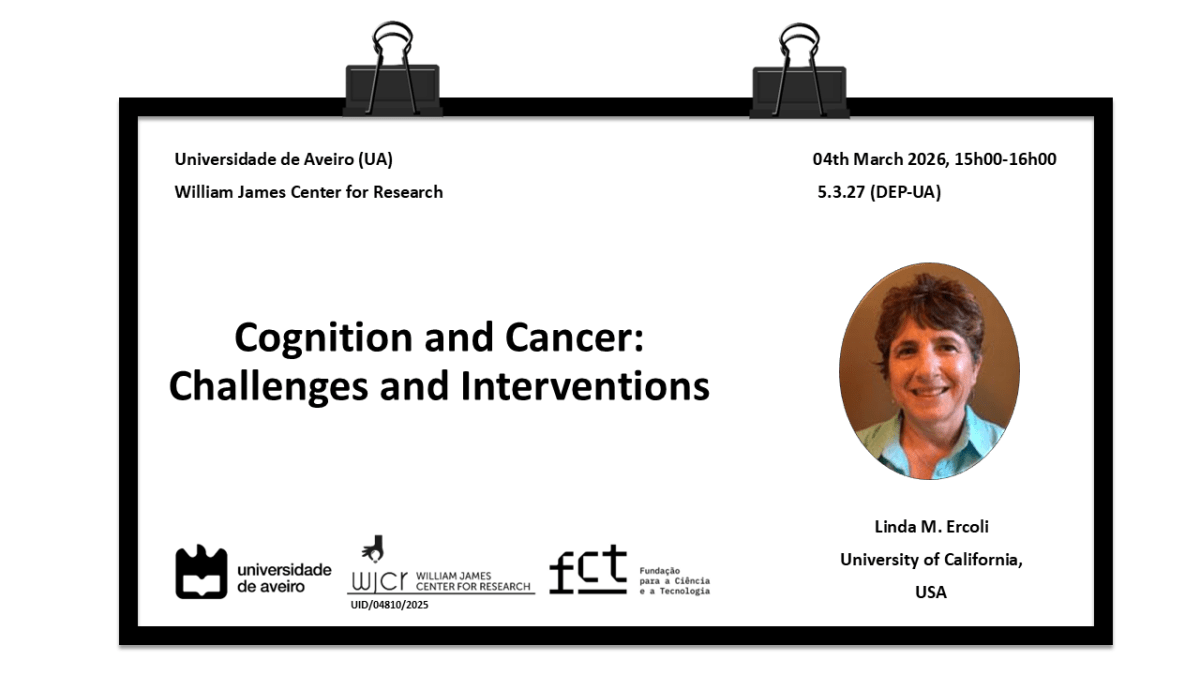
Prof. Dr. Linda M. Ercoli (University of California, USA) will give a lecture entitled “Cognition and Cancer: Challenges and Interventions”
About the Speaker:
Dr. Ercoli is a retired Health Sciences Clinical Professor in the Department of Psychiatry and Biobehavioral Sciences, in the Semel Institute, at the University of California, Los Angeles. She is a geriatric neuropsychologist and psychologist with special interests in the early detection of dementia, late onset depression, dementia caregiver stress and education, and the creation of cognitive training and rehabilitation programs for older adults, and cancer survivors. She has been the Interim Director of the UCLA Longevity Center since 2020, a campus-based non-profit organization dedicated to wellness, brain health, and life-long learning for older adults. She is currently Recall Faculty at UCLA continuing her work at the Longevity Center, in caregiver support, and as a consultant for clinical trials.
When/Where: 04th March 2026, 15h00, at Universidade de Aveiro (Room 5.3.27 DEP-UA) and online.
Abstract:
Cancer and cancer treatment are associated with both objective and subjective cognitive impairment. With increasing survival rates of cancer patients, their cognitive functioning and quality of life have become a focus of attention. Cancer related cognitive impairment (CRCI; informally called “chemo brain” or “chemo fog”) is detectable on objective cognitive tests, particularly in the areas of working memory, executive functioning, information processing speed, and learning efficiency. These deficits can last anywhere from six months to over a decade post-treatment. The cognitive difficulties interfere with daily functioning at home and at work, and result in poorer quality of life. Currently, there are no specific medications for CRCI. Cancer patients also have a high number of cognitive complaints and a lower quality of life. A growing body of evidence suggests that cognitive rehabilitation programs can improve objective and subjective cognition for many patients and help them adapt in everyday life. In this presentation, I will provide an overview of CRCI, focusing on the effects of cancer and cancer treatment on cognitive complaints, objective cognitive tests, and brain function. I will provide an overview of the methods and effectiveness of cognitive rehabilitation programs for CRCI.
Online access: HERE
 WJCR
WJCR 